The psychology behind why we suddenly want things we never wanted before.
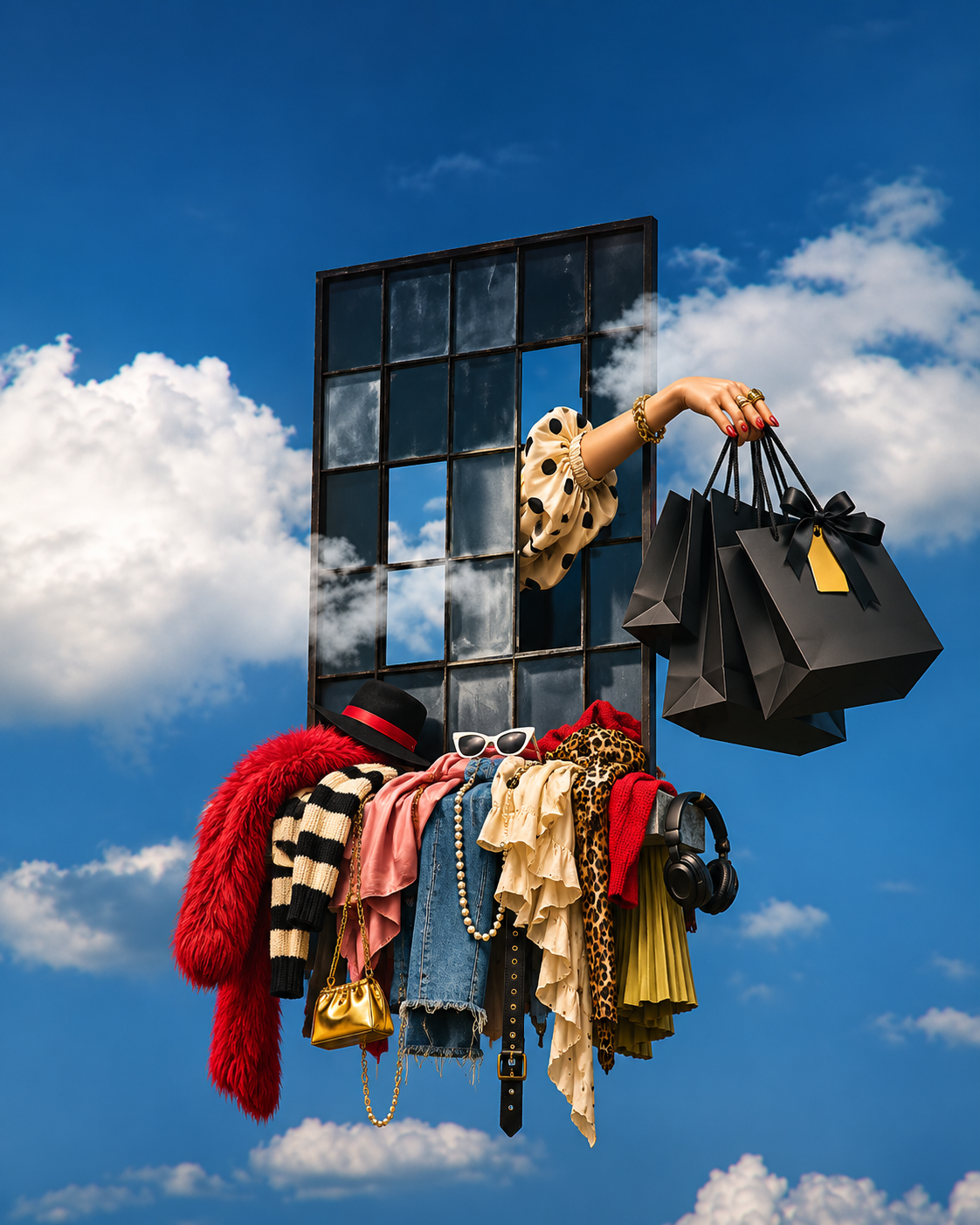
Visual concept and creative direction © 2026 Sugeiry Fernandez | YOKāLLOY.
Have you ever purchased something online and later questioned whether you actually needed it? Maybe it was a new pair of sneakers, an outfit, makeup, or something you saw trending on TikTok. At the moment, buying it probably felt exciting, but after a while, that excitement may have disappeared.
With social media becoming such a big part of our everyday lives, I feel like we are constantly being influenced to purchase things without even realizing it. Sometimes, we convince ourselves that we need something simply because we see other people with it. This is where psychology comes into play.
Overconsumption is more than just spending money or shopping too much. It is also connected to how we think, how we feel about ourselves, and how society influences our decisions. One psychological concept that helps explain this behavior is upward social comparison, which shows how comparing ourselves to others can influence our purchasing habits.
When Wanting Becomes Needing

Visual concept and creative direction © 2026 Sugeiry Fernandez | YOKāLLOY.
Overconsumption is the habit of purchasing more products than we actually need. I personally don’t believe there is anything wrong with shopping or treating yourself to something nice. However, I do believe it becomes a problem when we start allowing outside influences to determine what we buy. Today, we are constantly exposed to advertisements, influencers, celebrities, and social media trends that make certain products seem necessary.
Whether it’s the newest iPhone, a designer handbag, or a pair of sneakers, there is always something new being promoted. Research by Dittmar et al. (2007) found that materialistic values and the desire to improve one’s emotions or identity through shopping were associated with compulsive online buying tendencies. What makes this interesting to me is how quickly something can go from being a product we never thought about purchasing to something we suddenly feel like we need.
The Comparison Trap
One of the psychological concepts that connects to overconsumption is upward social comparison. Psychologist Leon Festinger (1954) introduced social comparison theory, which explains how people evaluate themselves by comparing their opinions and abilities to those of others. Upward social comparison happens when we compare ourselves to people we believe are doing better than us or have something we wish we had. From a social-cultural perspective, our thoughts and behaviors are influenced by the people around us and the society we live in.
Social media plays a major role in this because we are constantly looking at other people’s lives through pictures and videos. Research by Vogel et al. (2014) found that upward social comparisons on social media were associated with lower self-esteem. I think this is important because people sometimes forget that social media doesn’t always show reality. We usually see the best parts of someone’s life, not everything happening behind the scenes.
Are You Buying the Product or the Lifestyle?
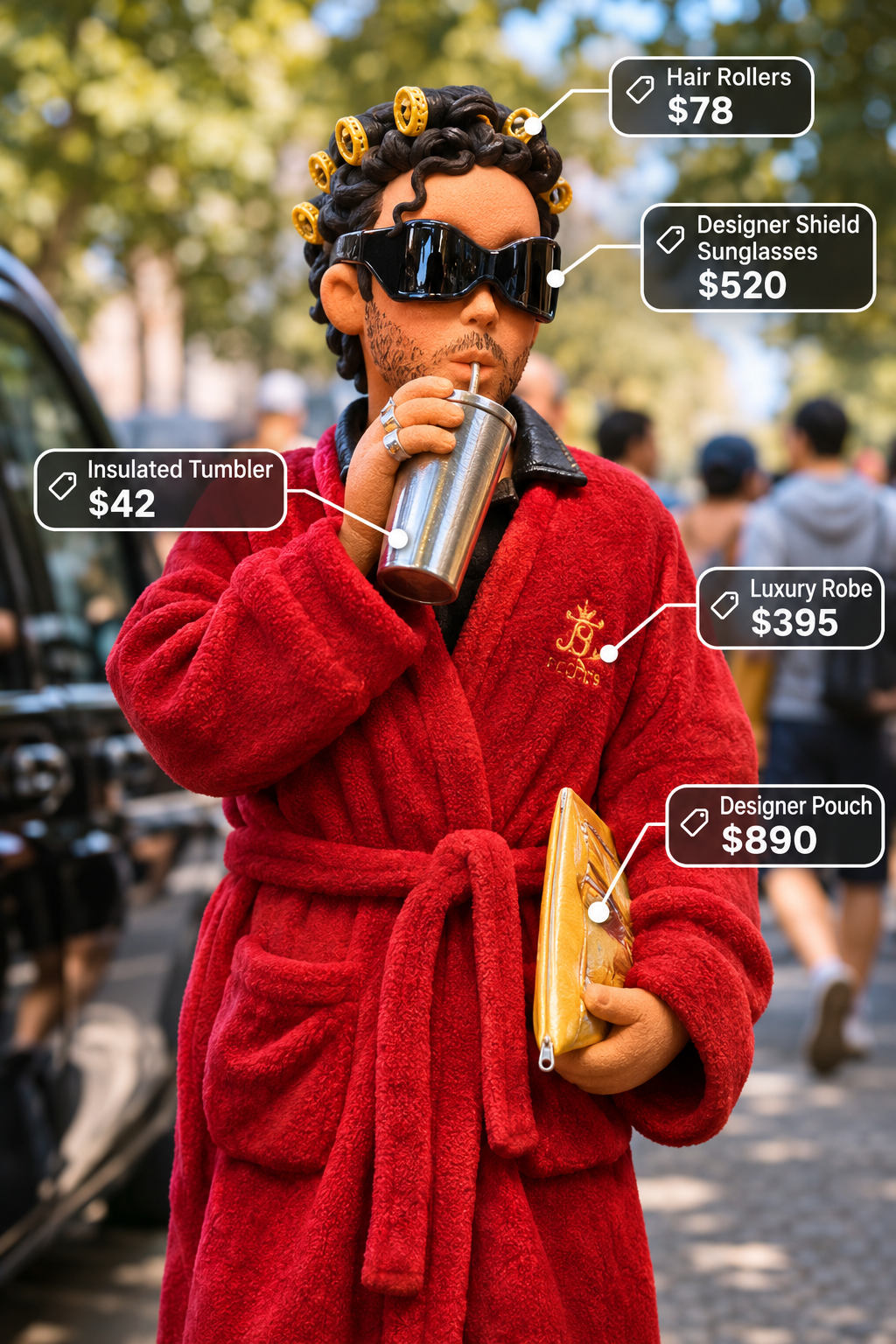
Visual concept and creative direction © 2026 Sugeiry Fernandez | YOKāLLOY.
I think this is especially noticeable in the fashion industry. As someone who loves fashion and sneakers, I understand how exciting it can be when a new collection or sneaker is released. Sometimes, seeing someone style a particular outfit or wear a pair of sneakers can make you want to purchase the same thing, even when you weren’t originally looking for it. For example, someone might see their favorite influencer wearing a designer handbag and suddenly feel like they need that same bag. It is not necessarily because they need another handbag, but because of the lifestyle or image associated with owning it.
Dittmar et al. (2007) explained that shopping can be connected to emotional needs and the desire to improve how we see ourselves. I also think people sometimes associate expensive products with success, confidence, or social status, which creates even more pressure to spend money.
See It. Want It. Buy It. Repeat.
Another interesting part of overconsumption is the cycle that happens when we shop. It usually starts with seeing a product online. After seeing someone else with that product, we may begin comparing ourselves to them or feeling like we are missing out on something. Eventually, we convince ourselves to purchase it. At first, the purchase feels exciting, especially when we are waiting for the package to arrive.
However, once we receive the product and that excitement wears off, another trend or product catches our attention. Before we know it, we are repeating the same behavior. Research on reward and motivation helps explain why wanting something can be different from actually enjoying it once we have it (Berridge & Robinson, 2016). I think this cycle is something many people experience without realizing how often it happens.
The Thrill Is in the Chase
Psychology also helps explain why shopping can feel so rewarding. One important neurotransmitter involved in this process is dopamine. Dopamine plays a role in motivation and reward-related behavior. According to Berridge and Robinson (2016), dopamine is especially important in the motivation to seek rewards, which is different from the pleasure we experience when we receive them. This helps explain why anticipating a purchase can sometimes feel more exciting than actually owning the product.
Companies use different marketing strategies to encourage consumers to keep shopping. Personalized advertisements, limited-time offers, and social media algorithms constantly remind us about products we have viewed or shown interest in. For example, you might look at a pair of sneakers online, and suddenly advertisements for those same sneakers begin appearing on different platforms. The more you see the product, the more you may start thinking about purchasing it.
Your Feed Has Expensive Taste
We can see these psychological influences through everyday social media content. TikTok videos such as “Amazon Finds,” “Sephora Hauls,” and “Get Ready With Me” videos introduce people to products they may have never considered buying. Sneaker releases and limited-edition collections can also create excitement because consumers know certain products may sell out quickly.
This creates a sense of urgency and makes people feel like they have to purchase something immediately or risk missing out. I think this is one of the biggest reasons overconsumption has become so common. We are constantly being shown what other people are buying, wearing, and recommending. Vogel et al. (2014) demonstrated how social media creates opportunities for comparison that can affect how individuals view themselves. I believe these comparisons can also influence how we think about the products we own and the things we want to purchase.
Before You Add to Cart...
Although overconsumption is common, understanding the psychology behind it can help us become more mindful consumers. I don’t think the solution is to stop shopping completely, especially because fashion and personal style are ways people express themselves. Instead, I think it is important to become more aware of why we are making certain purchases.
Before buying something, we should ask ourselves whether we actually need it, whether we will use it, and whether we want it because we genuinely like it or because everyone else seems to have it. Another helpful habit is waiting at least 24 hours before making an unnecessary purchase. Sometimes, giving ourselves time to think can help us realize that the excitement was temporary and that we don’t really need the product.
Who's Really Making the Decision?
The psychology behind overconsumption shows how much our environment can influence our everyday decisions. Through upward social comparison, social media, and the brain’s reward system, we can better understand why people sometimes purchase things they don’t necessarily need. What I find most interesting about this topic is how easily our thoughts can be influenced without us even noticing.
As someone who enjoys fashion and sneakers, I understand the excitement of wanting something new, but I also recognize the importance of making responsible decisions. Learning about overconsumption has made me think more about the difference between wanting something because I genuinely like it and wanting it because I have been influenced by what I see online. At the end of the day, there is nothing wrong with enjoying shopping, but I believe we should be the ones controlling our purchases instead of allowing social media and outside pressures to control them.
Comment Below
Have you ever bought something you didn't need simply because you saw someone else with it? We'd love to hear your thoughts! Share your experiences and perspectives in the comments below.